






Florida’s Open Carry Ruling: What It Means for Weapons Charges in Hillsborough County
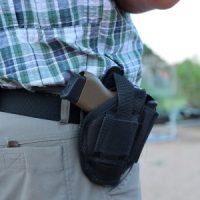
Florida’s open carry era is about a year old. Anyone who assumed weapons arrests would fade away with the ban has probably noticed they haven’t.
In September 2025, the First District Court of Appeal held that Florida’s open carry prohibition, Section 790.053 of the Florida Statutes, violates the Second Amendment. The state declined to seek further review, and the Attorney General directed law enforcement agencies statewide to stop enforcing the ban as of September 25, 2025.
Here’s the part many people miss. The Legislature never repealed the statute, which still appears in the 2026 Florida Statutes as a second-degree misdemeanor. The right to carry openly in Tampa rests on a court opinion and an executive directive, not a rewritten law.
A Ruling From a Different District
Hillsborough County falls within the Second District Court of Appeal, not the First. Florida trial courts generally follow another district’s ruling when their own district hasn’t spoken on the issue, so local judges are bound by the decision for now. However, the Florida Supreme Court upheld the same ban in 2017, using a legal test that later federal decisions discarded. That tension remains unresolved, and a conflicting district ruling could reopen the question. Today’s rules are stable, but not permanent.
What the Ruling Did Not Change
The decision changed how eligible people may carry. It did not change who may carry or where. Charges that remain fully enforceable in Hillsborough County include:
- Possession of a firearm by a convicted felon under Section 790.23, a second-degree felony
- Improper exhibition under Section 790.10, which covers displaying a weapon in a rude, careless, angry, or threatening manner
- Carrying in locations listed in Section 790.06(12), such as courthouses, schools, polling places, and the bar area of a restaurant
- Carrying by someone who doesn’t meet Florida’s eligibility criteria for permitless carry, including people under 21
- Armed trespass under Section 810.08, which becomes a third-degree felony when the person refuses to leave private property while carrying a firearm
That last item deserves attention. A shopper who ignores a manager’s request to leave can go from lawful carrier to felony defendant in minutes.
Visibility Cuts Both Ways
Open carry changes police encounters in two opposite directions. First, a visible holstered handgun, standing alone, no longer points to a crime. Before the ruling, an exposed pistol arguably justified a stop. Today, it may not supply reasonable suspicion. If a stop rested entirely on the presence of a lawfully carried firearm, the evidence that followed may be vulnerable to a suppression motion.
Second, a visible gun creates witnesses. During a parking lot argument or a road rage incident, a bystander who sees a hand drift toward a holster may report it as a threat. Improper exhibition and aggravated assault cases frequently turn on perception, and perception is shaped by how nervous the observer was. Cross-examination is often where these cases are won or lost, which is why experienced Tampa firearm charge attorneys look closely at what each witness actually saw, from where, and for how long.
Talk Through Your Case With Us
A weapons arrest made after September 2025 may rest on assumptions the law no longer supports. We review the stop, the witness accounts, and the eligibility questions that prosecutors sometimes gloss over. Call OA Law Firm at 813-461-5291, day or night, for a free and confidential consultation. We represent clients throughout Hillsborough and Pinellas Counties, and we’d rather hear from you early than late.
Source:
caselaw.findlaw.com/court/fl-district-court-of-appeal/117688141.html
