






Does Refusing a Breathalyzer Count as a DUI?
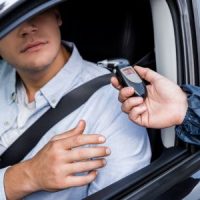
Yes, refusing a Breathalyzer test counts as a DUI, of sorts, in Florida. The Sunshine State has a refusal-to-submit law based on the state’s implied consent doctrine.
Implied consent to provide a chemical sample also serves as the basis for administrative license revocation in Florida. Even if the defendant “beats” the DUI, a court could suspend the defendant’s drivers’ license based on a Breathalyzer refusal or a Breathalyzer failure.
Florida’s complex ancillary DUI laws underscore the need for a top Tampa criminal defense lawyer who thoroughly evaluates these cases and strongly urges all possible defenses.
What Is Florida’s Refusal to Submit Law?
As mentioned, Florida’s refusal to submit law is based on the state’s implied consent statute. When a police officer has lawful grounds to believe a driver is under the influence of alcohol or certain drugs, the officer may request a breath, urine, or, in some circumstances, blood test as permitted by law. A refusal can trigger consequences even if the driver is not ultimately convicted of DUI.
It is important to note that the specific type of test requested and the legal authority for requesting it can vary depending on the circumstances.
Penalties for Refusing a Chemical Test
Refusing to submit to a lawful chemical test may result in significant administrative consequences, including:
- Suspension of your driver’s license for a first refusal.
- A longer license suspension for subsequent refusals.
- Additional legal consequences if the refusal is not a first offense, as provided under Florida law.
- The refusal may be introduced as evidence in court in a DUI prosecution, subject to applicable legal rules.
The exact outcome depends on the facts of the case, prior history, and the applicable statutes.
Moreover, a new Florida law, effective October 1, 2025, makes it a second-degree misdemeanor to refuse a lawful request for a breath or urine test following a DUI arrest.
This amendment, commonly referred to as “Trenton’s Law,” is one of the most significant changes to Florida’s DUI enforcement in recent years. It applies if an officer had probable cause to suspect the defendant was under the influence, the defendant “was driving or in actual physical control of a motor vehicle,” and the defendant refused to provide a sample.
So, if a Tampa criminal defense lawyer disproves probable cause, perhaps because the defendant refused to perform the one-leg stand and other field sobriety tests, a Section 316.1939 infraction won’t hold up in court. An attorney could make the same argument if the defendant was unconscious behind the wheel.
Can You Challenge a Refusal?
Yes. A refusal does not automatically mean the penalties will remain in place. Drivers may have legal options to challenge the stop, the arrest, whether the request for testing was lawful, whether proper procedures were followed, or whether the implied consent warning was adequately provided. Because every case is different, the available defenses depend on the specific facts.
Why Legal Representation Matters
A DUI case involving a refusal can be legally complex. An experienced DUI attorney can review the circumstances of the traffic stop, examine the evidence, identify potential procedural issues, and explain the available legal options. Early legal guidance may help protect your driving privileges and your rights throughout the process.
Reach Out to a Detail-Oriented Hillsborough County Attorney
Criminal charges don’t always produce permanent convictions. For a confidential consultation with an experienced Tampa criminal defense lawyer, contact the OA Law Firm. We routinely handle matters throughout the Sunshine State.
Source:
leg.state.fl.us/statutes/index.cfm?App_mode=Display_Statute&URL=0300-0399/0316/Sections/0316.1939.html
